
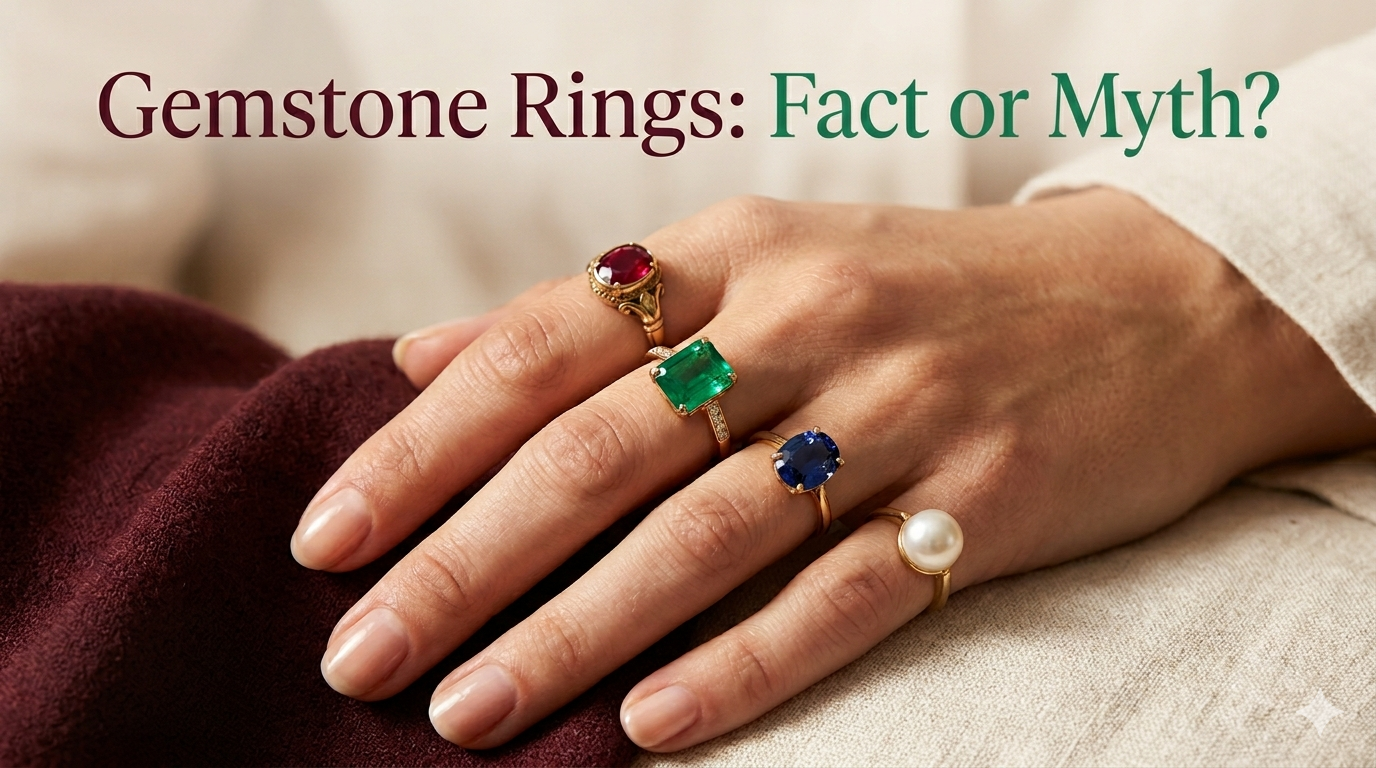
Walk into any jewelry shop and you’ll spot rings with ruby, emerald, or blue sapphire stones, often sold with a promise: wear this, and your health or luck will improve. But do gemstone ring benefits actually hold up, or is it all in the mind?
This question sits right between science and centuries-old tradition. Some people swear that switching to a particular stone changed their energy, mood, or even their skin. Others call it pure superstition. In this post, we’ll look at both sides honestly — what modern science says, what ancient belief systems claim, and which specific gemstones are linked to which health factors, so you can decide for yourself with full information.
What Science Actually Says About Gemstone Ring Benefits
Here’s the straightforward part: there is no peer-reviewed scientific evidence proving that wearing a gemstone healing properties can cure diseases, balance hormones, or boost immunity. Gemstones are minerals — beautiful, often rare, but chemically inert once cut and set into a ring. They don’t release compounds into your bloodstream the way a medicine does.
So why do so many people report feeling better after wearing one? Doctors and psychologists point to a few real, well-documented effects:
- The placebo effect — believing something will help you can genuinely reduce stress and improve mood, even without a biological mechanism.
- Comfort and ritual — wearing a meaningful ring can feel grounding, similar to a lucky charm.
- Confirmation bias — once you expect a stone to help, you notice the good days more than the bad ones.
So from a purely medical standpoint, gemstone ring benefits for physical illness are considered a myth. But the psychological comfort some people feel is very real — it’s just not coming from the stone itself.
Where the Belief Comes From: Gemstone Therapy and Astrology
The idea isn’t random — it comes from a structured tradition called Vedic astrology, which links nine gemstones to nine planets in a system known as Navratna. According to this belief, each planet influences a different part of life and health, and wearing the “right” stone for your birth chart is said to correct imbalances caused by that planet.
This isn’t about gemstone therapy being scientifically proven — it’s about understanding why millions of people still follow it. For many, it’s cultural and spiritual, passed down through generations, similar to how some cultures trust herbal remedies passed down by elders.
Specific Gemstones and Their Claimed Health Factors
Here are the most common stones used in gemstone therapy, along with the gemstone ring benefits traditionally associated with each one. Remember: these are traditional and astrological claims, not medically confirmed facts.
- Ruby (Manik) — Linked to the Sun; traditionally believed to boost confidence, heart health, and blood circulation.
- Pearl (Moti) — Linked to the Moon; said to calm the mind, reduce anxiety, and improve sleep quality.
- Red Coral (Moonga) — Linked to Mars; believed to increase energy, courage, and healthy blood count.
- Emerald (Panna) — Linked to Mercury; associated with sharper memory, clearer skin, and better communication skills.
- Yellow Sapphire (Pukhraj) — Linked to Jupiter; said to support liver health, digestion, and overall wisdom.
- Diamond (Heera) — Linked to Venus; traditionally tied to charm, skin glow, and reproductive health.
- Blue Sapphire (Neelam) — Linked to Saturn; believed to bring discipline and relief from depression-like symptoms.
- Hessonite (Gomed) and Cat’s Eye (Lehsunia) — Linked to Rahu and Ketu; said to protect against sudden illness and mental confusion.
If you’re drawn to wearing one, there’s no harm in choosing a stone for its beauty or sentimental value — just don’t replace real medical treatment with it.
FAQs
Is wearing a gemstone ring scientifically proven to improve health?
No. There’s no clinical evidence that gemstones treat or prevent illness. Any improvement felt is more likely linked to the placebo effect or psychological comfort.
Which gemstone is best for mental peace?
In gemstone therapy, pearl and blue sapphire are most commonly recommended for calmness and emotional balance, though this is based on tradition, not science.
Can wearing the wrong gemstone harm me?
Physically, no — gemstones are inert. Astrologically, some believe an unsuitable stone can increase stress, but this isn’t medically supported.
Conclusion
So, are gemstone ring benefits fact or myth? The honest answer is both: medically, it’s a myth — no stone heals the body. Traditionally, it’s a meaningful belief system that has brought people comfort for centuries. The real benefit might simply be the confidence and calm you feel wearing something you believe in.
If you found this breakdown useful, stick around — wordtrail.blog regularly unpacks the truth behind everyday beliefs like this one.