
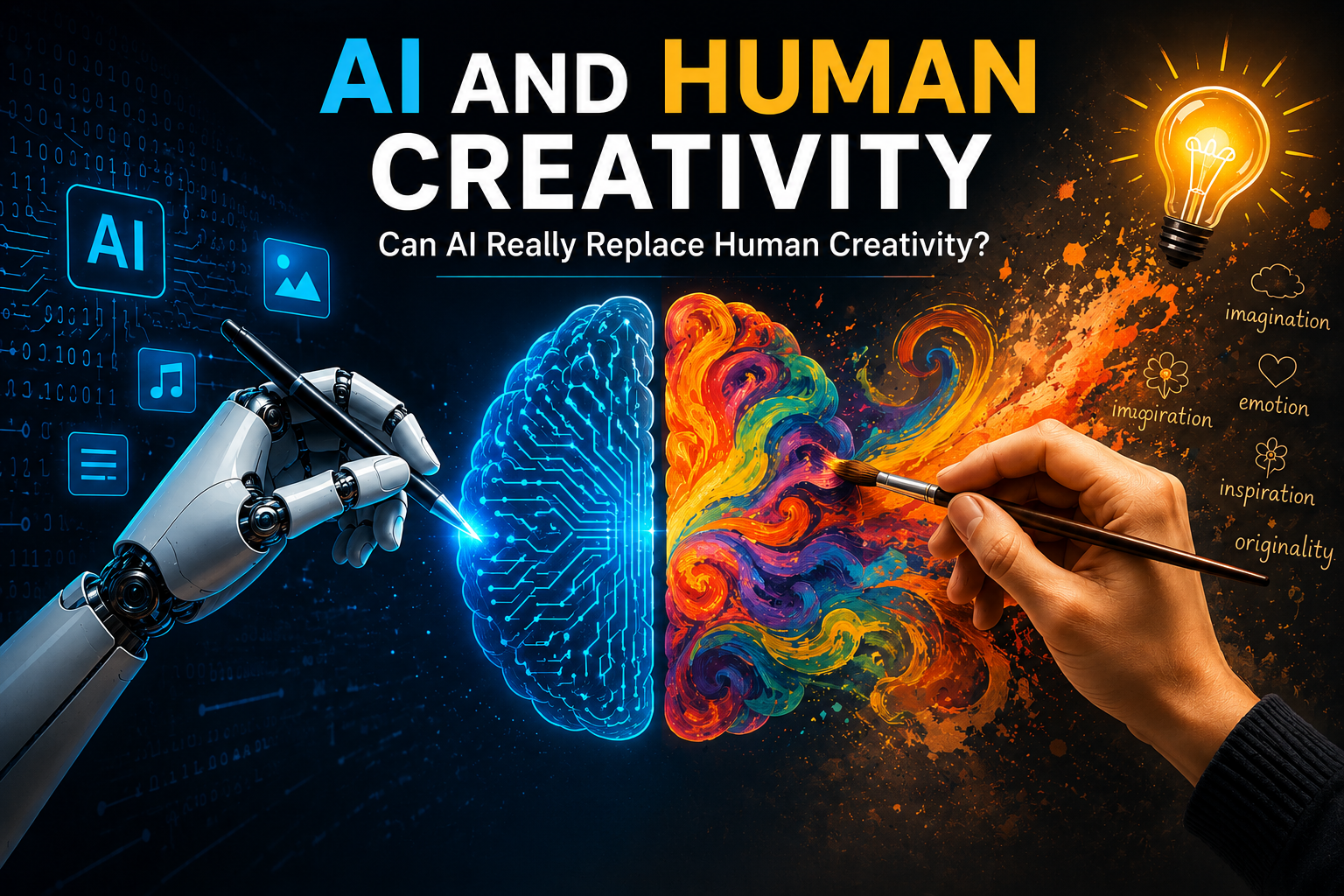
Artificial intelligence is becoming a part of our everyday lives. From writing articles and creating digital art to composing music and editing videos, AI can now perform many creative tasks in just a few seconds. Because of these rapid advancements, many people are asking one important question: Can AI really replace human creativity?
The debate around AI and human creativity is growing as more businesses, students, and content creators use AI tools. While AI is making creative work faster and more efficient, it is still different from the way humans think and create. Let’s explore whether AI can truly replace the human mind.
What Is AI and Human Creativity?
To understand the difference, we first need to know how both work.
AI and human creativity are built on completely different foundations. AI creates content by learning from massive amounts of existing data. It studies patterns, language, images, and designs to generate new content that looks original. However, AI does not have emotions, personal experiences, or imagination.
Human creativity, on the other hand, comes from feelings, memories, curiosity, and unique life experiences. A writer may create a story inspired by childhood memories, while an artist may paint based on emotions. These personal experiences make human creativity truly unique.
What Can AI Do Creatively?
AI has become an excellent creative assistant. Today, it can:
- Write blogs, emails, and social media posts.
- Generate realistic images and artwork.
- Compose music and create videos.
- Suggest new ideas for marketing and content creation.
- Help businesses save time and improve productivity.
These abilities make AI an important tool for creators. Instead of spending hours on repetitive work, people can focus more on planning and improving their ideas.
Why Human Creativity Still Matters
Even though AI is powerful, it cannot replace the qualities that make humans creative.
People understand emotions, culture, humor, and real-life experiences. They can create original ideas, solve unexpected problems, and connect with others on an emotional level. AI can imitate creativity, but it cannot genuinely feel happiness, sadness, love, or inspiration.
This emotional understanding is what makes books, paintings, movies, and music meaningful. It is one of the biggest differences between AI and human creativity.
Can AI and Humans Work Together?
Rather than replacing people, AI is more likely to become a creative partner.
Many writers use AI to generate outlines, designers use it for inspiration, and businesses rely on AI to improve efficiency. Humans then refine these ideas with creativity, emotion, and critical thinking.
The future of AI and human creativity is likely to be based on collaboration instead of competition. AI can handle repetitive tasks, while humans provide originality and innovation.
FAQs
Can AI completely replace human creativity? No, AI cannot completely replace human creativity. While AI can generate text, images, music, and other creative content, it lacks emotions, personal experiences, and imagination. Human creativity is driven by original thinking and emotional understanding, which AI cannot truly replicate.
How is AI and human creativity different? The main difference is that AI creates content by analyzing existing data and identifying patterns, whereas human creativity comes from emotions, experiences, curiosity, and imagination. This makes human-created work more personal and meaningful.
Will AI become more important in creative industries? Yes, AI is expected to play a bigger role in creative industries by helping people work faster and generate ideas. However, the best results will come when AI and human creativity work together, allowing humans to add originality, emotions, and critical thinking to AI-generated content.
Conclusion
So, can AI really replace human creativity? The answer is no—not completely. AI is an incredibly useful technology that can speed up creative work and generate helpful ideas, but it cannot replace imagination, emotions, or personal experiences.
As technology continues to evolve, the best results will come from combining AI and human creativity. When humans use AI as a tool instead of viewing it as a replacement, they can create smarter, more meaningful, and more impactful work.
